

King of Jewelry
Run a vintage jewelry business: hunt for bargains, haggle, appraise and sell to the right customer. Build your collection from thousands of pieces, balance stock against the bills, and solve 500 jewelry puzzles to earn new treasures.
- Paid
- Windows
- Simulation
- Oct 22, 2026
Trailer
Screenshots and videos
About King of Jewelry
King of Jewelry is a single-player game centered on trading vintage jewelry, building a collection of precious finds, and completing logical puzzles. Trading revolves around the idea that a pretty object is not always a good buy, and the player starts the game by accepting a ring from a flea market in order to acquire a full set in their vault. The player learns how to buy, appraise, and sell jewelry while prioritizing the maintenance of sufficient liquid assets in their wallet for the next purchase. The game revolves around the theme of a potential buyer who has to distinguish between worthless jewelry and valuable finds and maintain a profitable business while managing a collection of treasures.
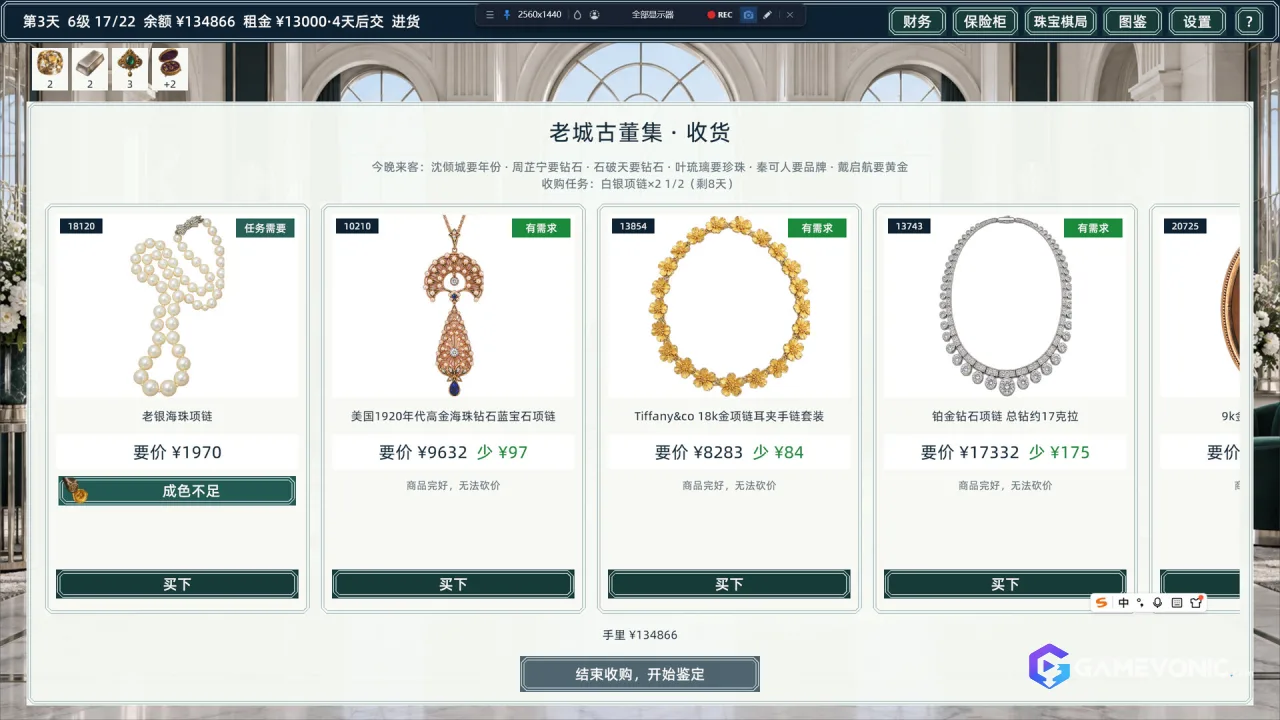
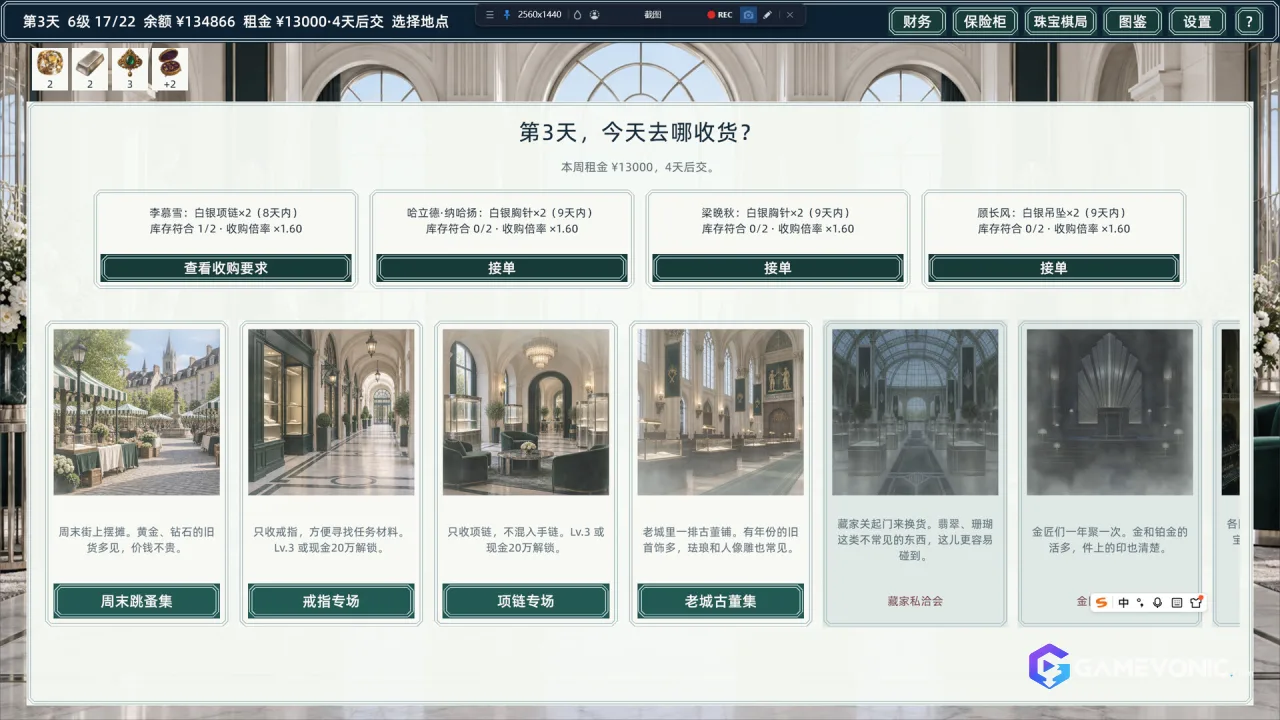
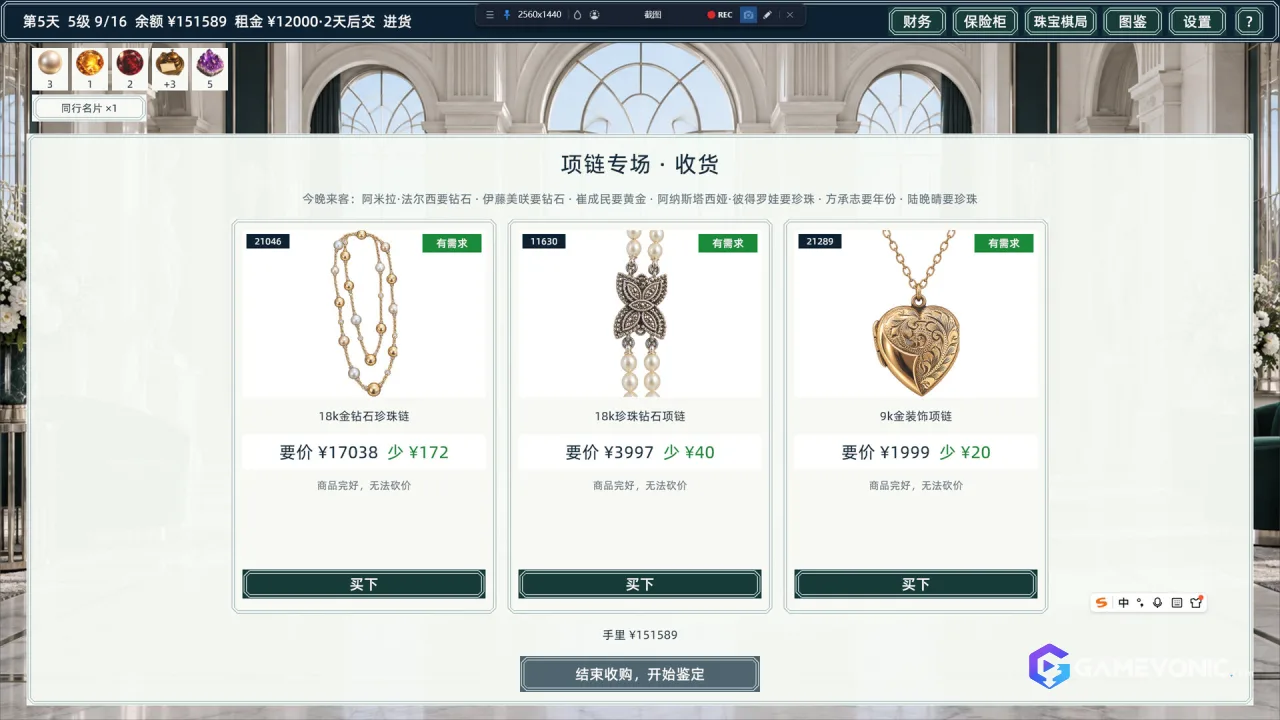
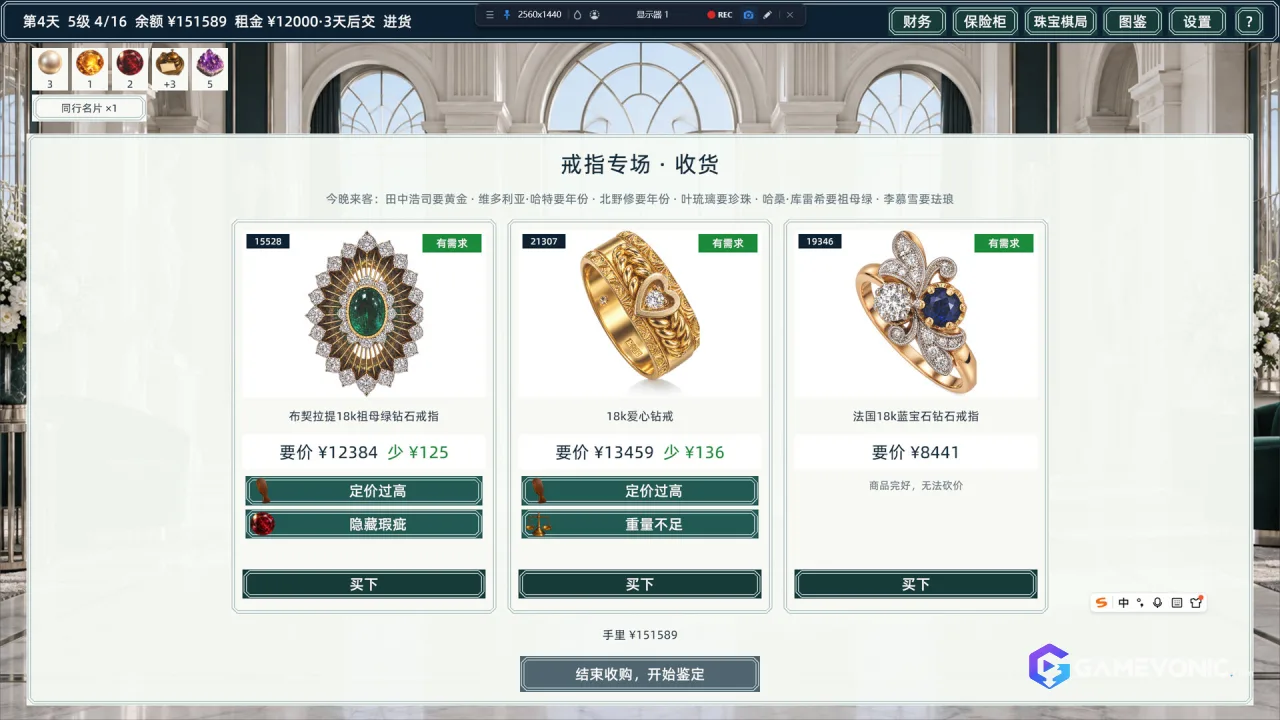
Finding and negotiating the purchase is the first aspect of the game. The player visits flea markets, antique shops, private collections, and exclusive venues in their quest for a good deal. A piece of jewelry is available for inspection but has to be evaluated for its potential value, and the player has to decide whether to accept the offered price or try to negotiate a lower amount. This mechanism is the basis for all future trades and does not explicitly offer any price indication or profit potential: the player has to use their skills as an appraiser and guesswork to determine whether the purchase is worth the investment.
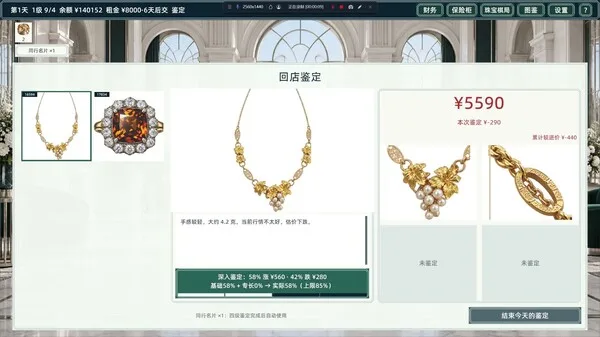
Appraisal is the next key aspect of the game. When the player returns home, the jewelry is examined to determine its actual value, and the player can either continue investigating or accept the initial appraisal. Alternatively, the player can sell the jewelry to a client or continue searching on their own. The appraisal process affects the potential value of the purchase, and a low-value acquisition can either be sold at a loss or kept as a collector’s item for its potential to increase in value. The appraisal mechanism is the core of the trading puzzle, as the player has to determine the fair price for a piece of jewelry before attempting to resell it at a higher value.
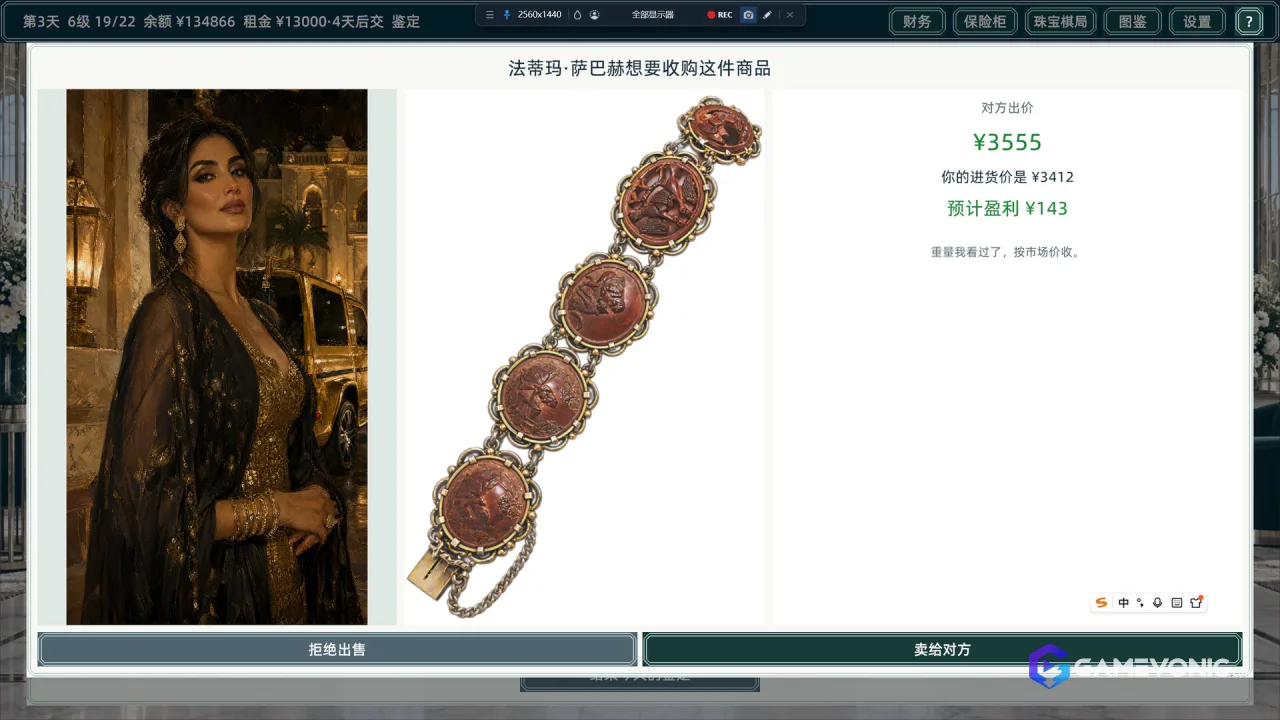
The customer is the final aspect of the game. Individual buyers have various demands, and the price is often not the primary condition, and the player has the option to accept or deny the offer. On the other hand, collection orders require the buyer to determine the specific materials and categories of jewelry that they want to see, and the player has to prepare such a set of items in order to trade. The customer has to deliver the ordered set of jewelry, and the collection can only be completed in advance if the player prepares the items in the vault.
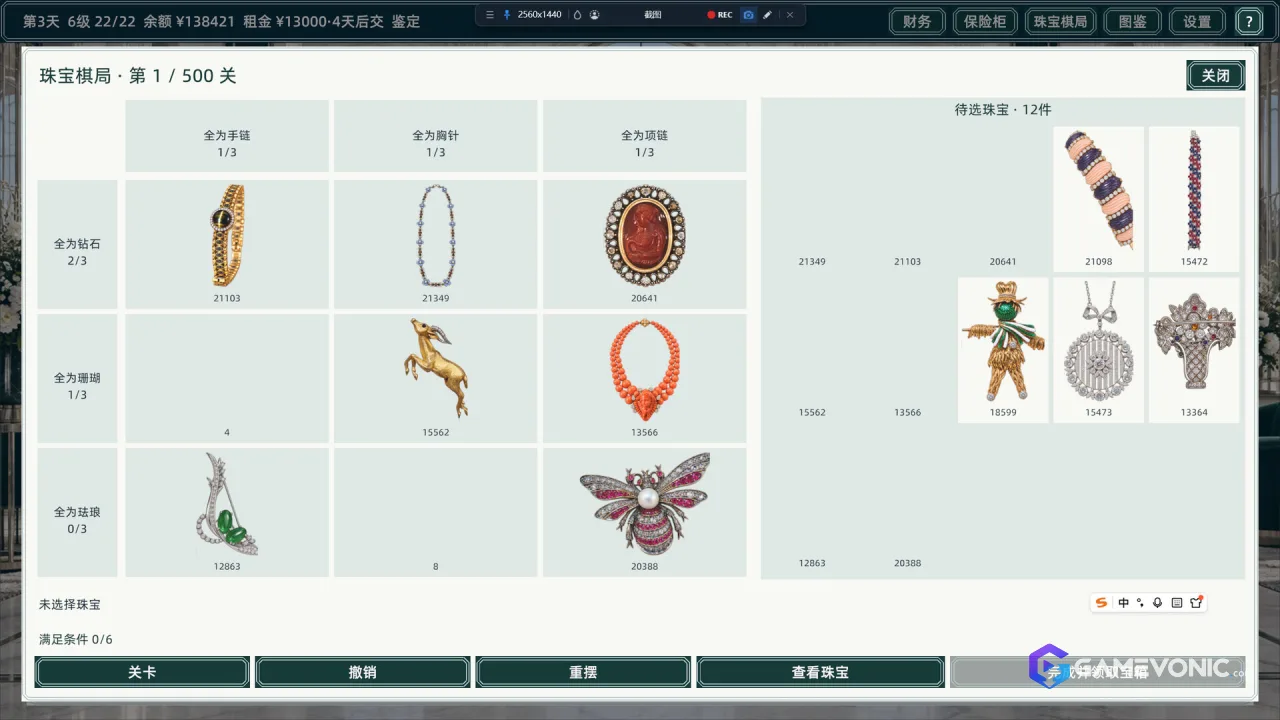
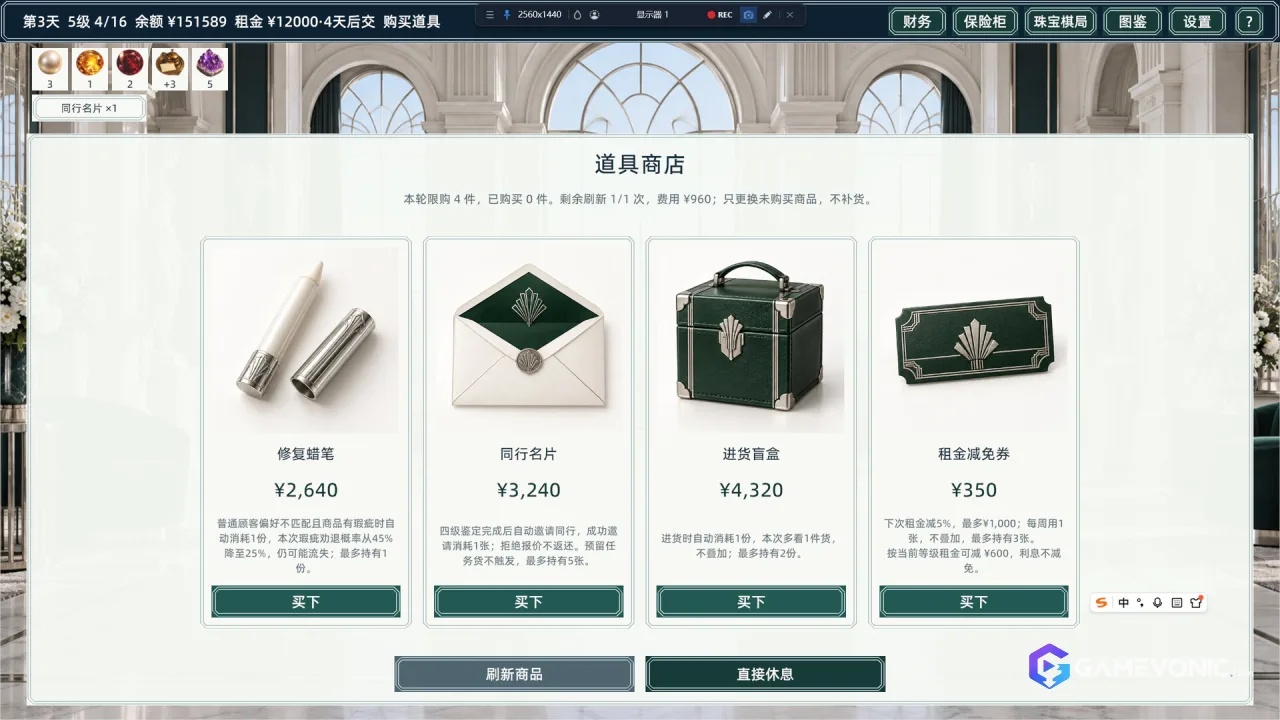
The business layer is the aspect that connects all other elements of the game. The player has to prioritize certain areas of the trading process, such as purchasing, appraisal, or selling. The game uses the vault to track the collection of jewelry with the player’s collection and provides a list of available options. However, the cash on hand is not the sole determinant of the trading capacity: the player also has to consider weekly expenses and the interest charged for borrowed funds and avoid reaching the end of the week without sufficient cash flow. The game becomes progressively more difficult as the player approaches one million in-game cash, as the game allows the player to continue until the business collapses. Finally, the puzzles are detached from the gameplay but become accessible from the main menu after completing a set of prerequisites. There are 500 puzzles in total, each of which requires the player to arrange rings and other jewelry according to specific criteria. Puzzles take the form of a grid of 3-by-3 cells in the beginning and continue to expand to 5-by-5 cells with the addition of new conditions. The player has an unlimited number of moves and opportunities to cancel a turn but will encounter time restrictions when completing puzzles. Each puzzle rewards the player with a treasure chest that can be claimed to add new jewelry to the collection when the player is ready.
The collection is, therefore, a substantial part of the game. The player builds their collection of jewelry for the sheer pleasure of doing so, and the game has over 7,400 different pieces of jewelry. The player can view close-up images of the items and examine different parts of the rings, necklaces, brooches, and earrings. Pieces that the player has seen can also be viewed in the journal, and a search feature allows the player to find specific items even after selling them. The overall presentation and feel of the game are similar to examining UK antiques, with the attention to the Art Deco design and the overall presentation. Thus, King of Jewelry provides an immersive and engaging collection management experience with the visual appeal of a British antique shop.
The practical considerations for this game include the understanding that King of Jewelry is a single-player trading game with puzzle elements rather than a game focused on speed and efficiency or a puzzle-based game. The game has two distinct modes but continues to follow the theme of trading and the satisfaction of completing puzzles. Another advantage is that the puzzle-based mode does not penalize the player for the time spent on the game. The game has a monetization system that utilizes in-game cash, and the player has to manage expenses, such as weekly expenses, and the interest paid on borrowed funds. The platform for the game is not explicitly indicated, and the current list of supported devices should be checked on the official website for the intended system: the game is likely to be available on PC. Finally, the game is available for digital download but has no physical version.
Strange Horticulture is an interesting option for those willing to pursue game collection management in a different setting, as the game revolves around the identification of plants and the completion of puzzles within a shop environment. Potions: A Curious Tale is another puzzle-oriented trading game where the player focuses on the crafting of potions and the maintenance of a shop. For an open-world trading game, Merchant of the Skies provides a realistic vision of trading with limited resources and the potential to explore the world. Moonlighter is a dungeon exploration game with the added twist of maintaining a shop in order to fund the adventures. Recettear: An Item Shop’s Tale is a game about maintaining a shop, managing the inventory, and haggling with customers. Puzzle Depot and Picross are ideal for those willing to try a different approach to the logic puzzle grid. Therefore, King of Jewelry is a single-player trade game with a focus on valuation and collection management, as well as an expansive set of 500 puzzles to complete. Those who seek to trade jewelry, manage a shop, and engage in puzzles should consider downloading King of Jewelry.
Key features
- Single-player vintage jewelry trading, collection building, and logic puzzles
- Visit flea markets, antique fairs, private collections, and exclusive venues
- Appraise purchases to discover their value
- Customers with different tastes, offers, and collection orders
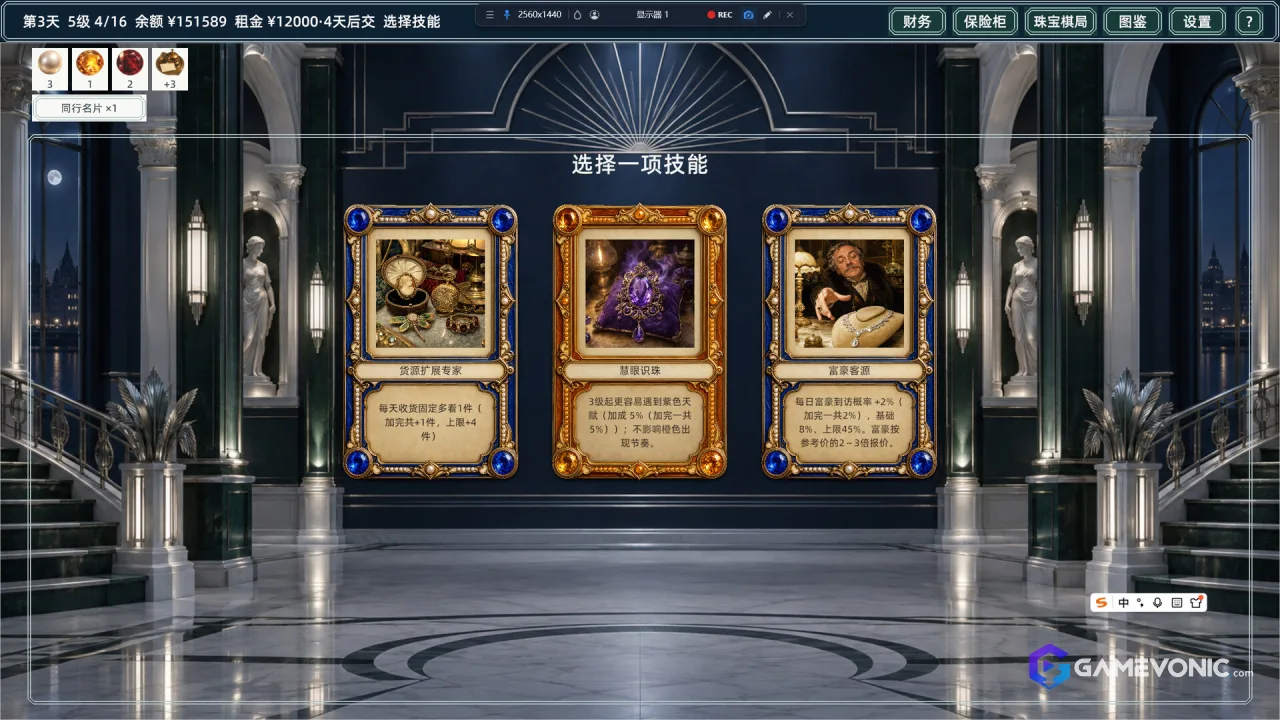
- Specializations in sourcing, appraisal, and sales
- Weekly fees and interest; stock on the shelf is not cash in hand
- One million in-game cash milestone
- 500 jewelry puzzles in puzzle mode, accessible from the main menu
- 3-by-3 to 5-by-5 boards with additional counting rules
- No timer or move penalty; swap pieces, undo moves, rearrange the board
- Treasure chests from first completions; claim jewelry into your business vault
- Over 7,400 pieces including rings, necklaces, brooches, and earrings
- Journal records seen pieces for later search and reference
- Interface inspired by British antique displays and Art Deco design
King of Jewelry system requirements
Minimum
- Requires a 64-bit processor and operating system
- OS
- Windows 10 64-bit
- Processor
- Intel Core i5-3470 或 AMD FX-8350
- Memory
- 8 MB RAM
- Graphics
- NVIDIA GeForce GTX 660 或 AMD Radeon HD 7870
- Storage
- 20 MB available space
- Sound Card
- DirectX compatible sound card
Recommended
- Requires a 64-bit processor and operating system
Versions
| Version | Release date | Platform | File size | |
|---|---|---|---|---|
| King of Jewelry 1.0 Latest version | Oct 22, 2026 | Windows | Download Now |
Comments about King of Jewelry
No comments yet. Share your thoughts about this game!